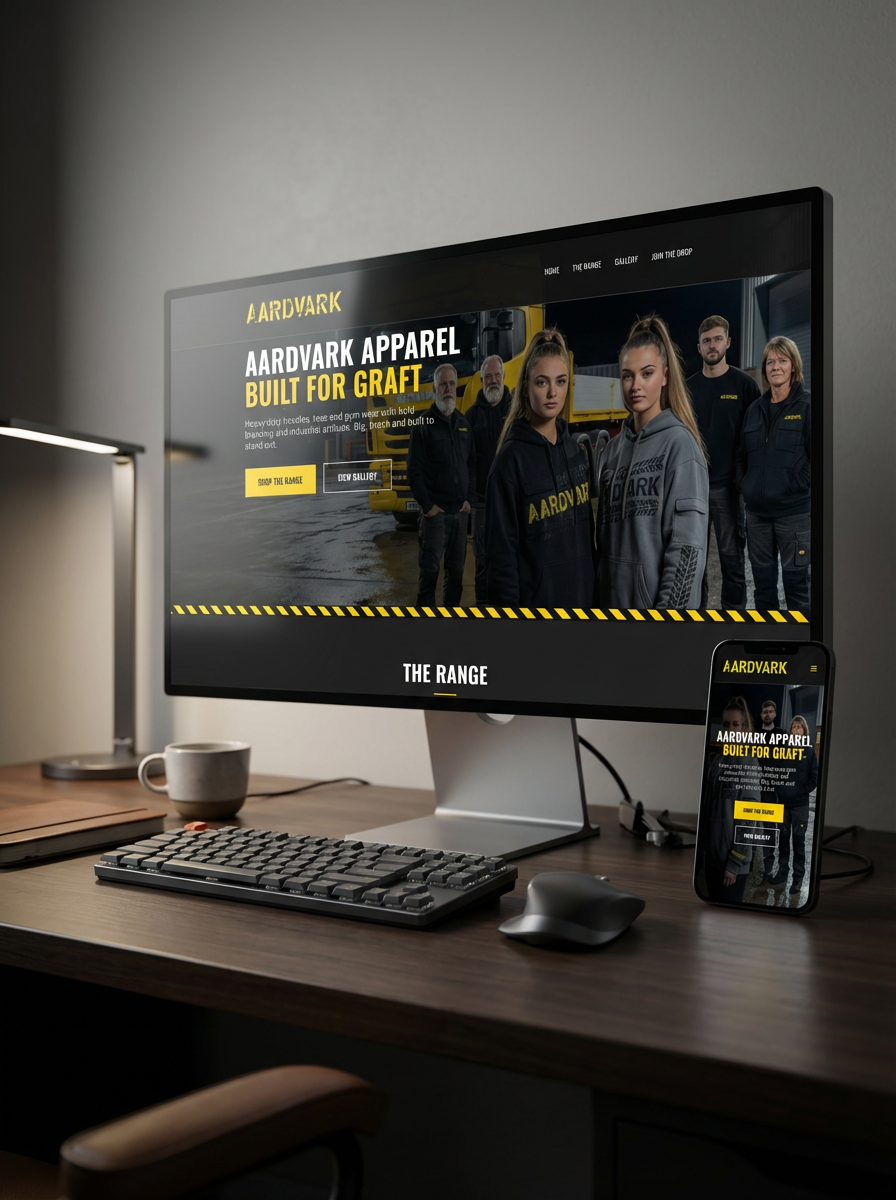
Most branding projects stall not because the client is indecisive, but because the concept is too abstract. A logo on a white slide deck is not the same thing as a logo on a garment, a vehicle, a shopfront, or a carrier bag. The gap between those two things is where uncertainty lives — and uncertainty kills momentum.
When we were working with Aardvark Apparel, we did not schedule another round-table. We built a quick visual mock-up showing what the brand could actually look like on clothing. No finished artwork, no formal presentation — just a clean, honest concept placed in a real-world context. The effect was immediate. Decisions that had been sitting in limbo became straightforward.
That experience is not unusual. It is, in our view, one of the most underused tools in a branding project.
What a Mock-Up Actually Does
A mock-up is not a final design. It is a decision-making tool. It takes a concept that exists as a typeface choice and a colour palette and places it somewhere believable — on a product, a screen, a piece of packaging. Suddenly the client is not being asked to imagine. They are being asked to react.
Reaction is far more useful than imagination when time and budget matter. A client who says "I think I like it" after seeing a flat logo file will often say "yes" or "not quite — that font feels too heavy" after seeing the same mark on an embroidered shirt. That second response is worth considerably more.
The Real Cost of Keeping It Abstract
Every week a branding project sits in the "thinking about it" phase has a cost. For the client, it is delayed trading, delayed marketing, delayed confidence in their own business identity. For us, it is a project that cannot move to the next stage.
Mock-ups compress that delay. They give clients something concrete to approve, reject, or refine — which is almost always faster than another conversation about what something might look like. We have found that showing a brand in context reduces the number of revision cycles too, because feedback becomes specific rather than vague.
When We Use This Approach
We reach for mock-ups early whenever a client tells us they have a brand in their head but cannot quite articulate it, or when they are nervous about committing to a direction. Apparel and merchandise are obvious candidates — seeing embroidery or print placement makes the design tangible in a way that flat artwork rarely does.
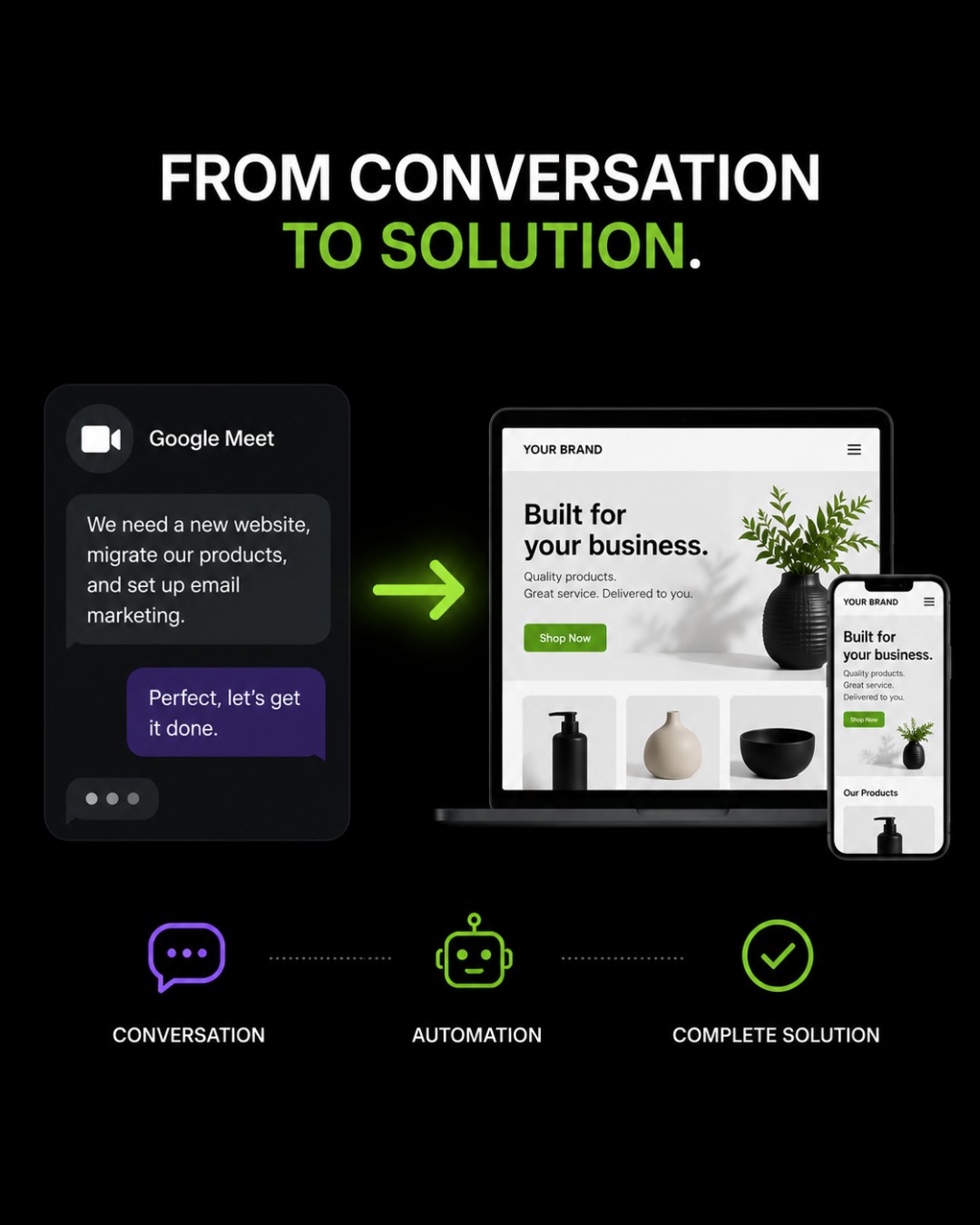
But the principle applies just as well to digital work. A website wireframe dropped into a browser mock-up, or a social media template shown on an actual phone screen, does the same job. It answers the question the client has not quite managed to ask: does this feel right in the real world?
Speed Is Not Shortcuts
It would be easy to misread this approach as cutting corners. It is the opposite. A well-considered mock-up requires a genuine understanding of the brand direction, the application, and the client's market. Dropping a half-formed logo onto a stock photograph helps nobody.
What we produce is purposeful. The Aardvark Apparel concept was not a throwaway visual — it was a considered representation of where the brand could go, built quickly enough to be useful at an early stage. That combination of speed and intent is what makes the exercise worthwhile.
Moving from "Maybe" to a Decision
The word we hear most often before a mock-up is "maybe". Maybe we like this direction. Maybe that colour works. Maybe this is the right typeface. After a well-executed mock-up, that word tends to disappear. Clients either move forward with confidence or they identify exactly what they want to change — both of which are progress.
Branding is not purely a visual discipline. It is a communication exercise, and mock-ups are one of the clearest ways to communicate what a brand will actually feel like to live with.
If your brand identity is still at the "idea in your head" stage, or if a previous branding project never quite made it across the line, we are happy to talk through what a visual concept exercise might look like for your business. You can book a call with our team and we can work out whether a quick mock-up is the right starting point.