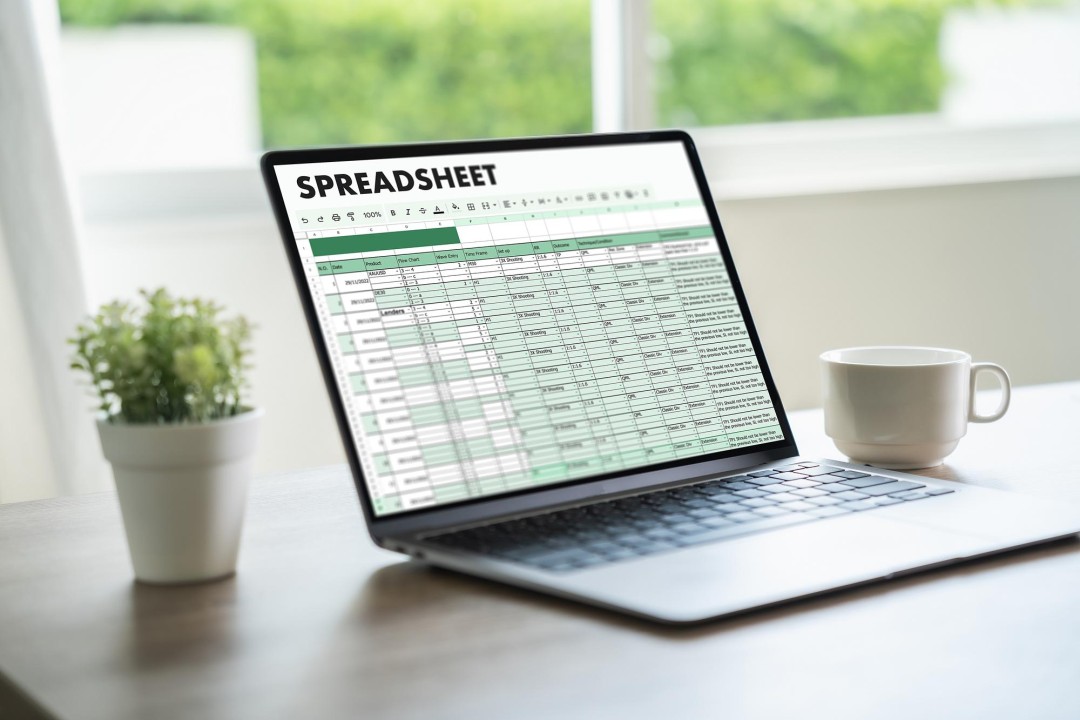
Most businesses don't have a technology problem. They have a patchwork problem. Jobs tracked in one spreadsheet, quotes in another, staff rotas on a shared drive that three people have edited into chaos, and customer follow-ups buried in someone's WhatsApp. It holds together — right up until the moment it doesn't.
We've spoken to enough business owners to know that the breaking point rarely announces itself. It's a renewal that slipped. A quote that went cold because nobody chased it. A job that fell between two spreadsheets and cost the business real money. The system didn't fail dramatically — it just quietly let something through the gap.
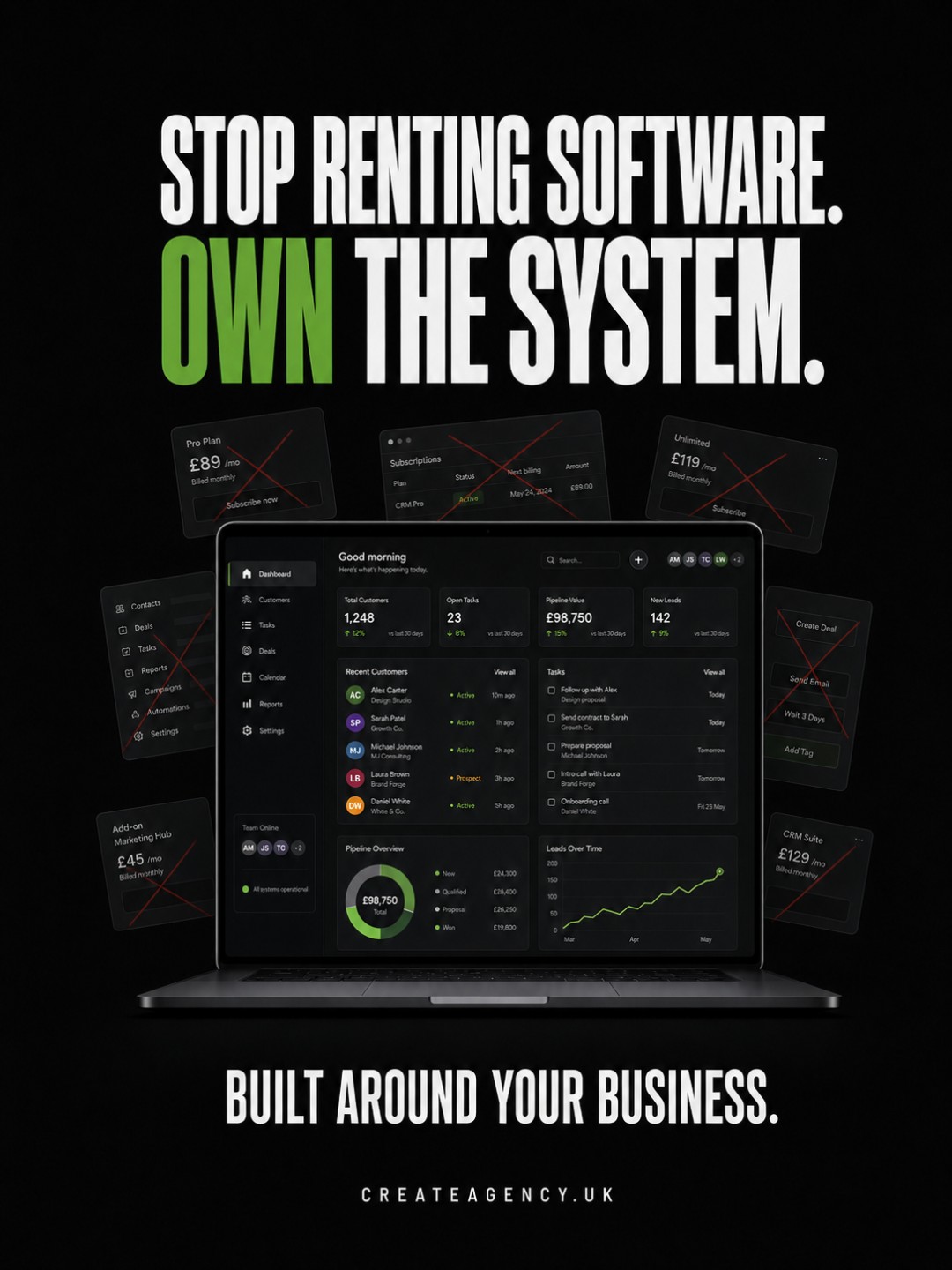
The instinct at that point is often to reach for an off-the-shelf SaaS platform. Something with a free trial, a tidy dashboard, and a feature list the length of a Sunday supplement. The trouble is, most of those tools are built for a theoretical business, not yours.
The Problem with General-Purpose Software
Off-the-shelf platforms are designed to serve the broadest possible market. That means they come loaded with features your business will never touch, workflows that don't match how your team actually operates, and a monthly subscription that climbs steadily as you add users or unlock the bits that actually matter.
We've seen businesses paying for enterprise CRMs and using them as glorified address books. Others running project management platforms where staff log in, mark one thing done, and go straight back to the spreadsheet because it's faster. The tool becomes another layer of admin rather than a replacement for it.
What a Purpose-Built Tool Actually Looks Like
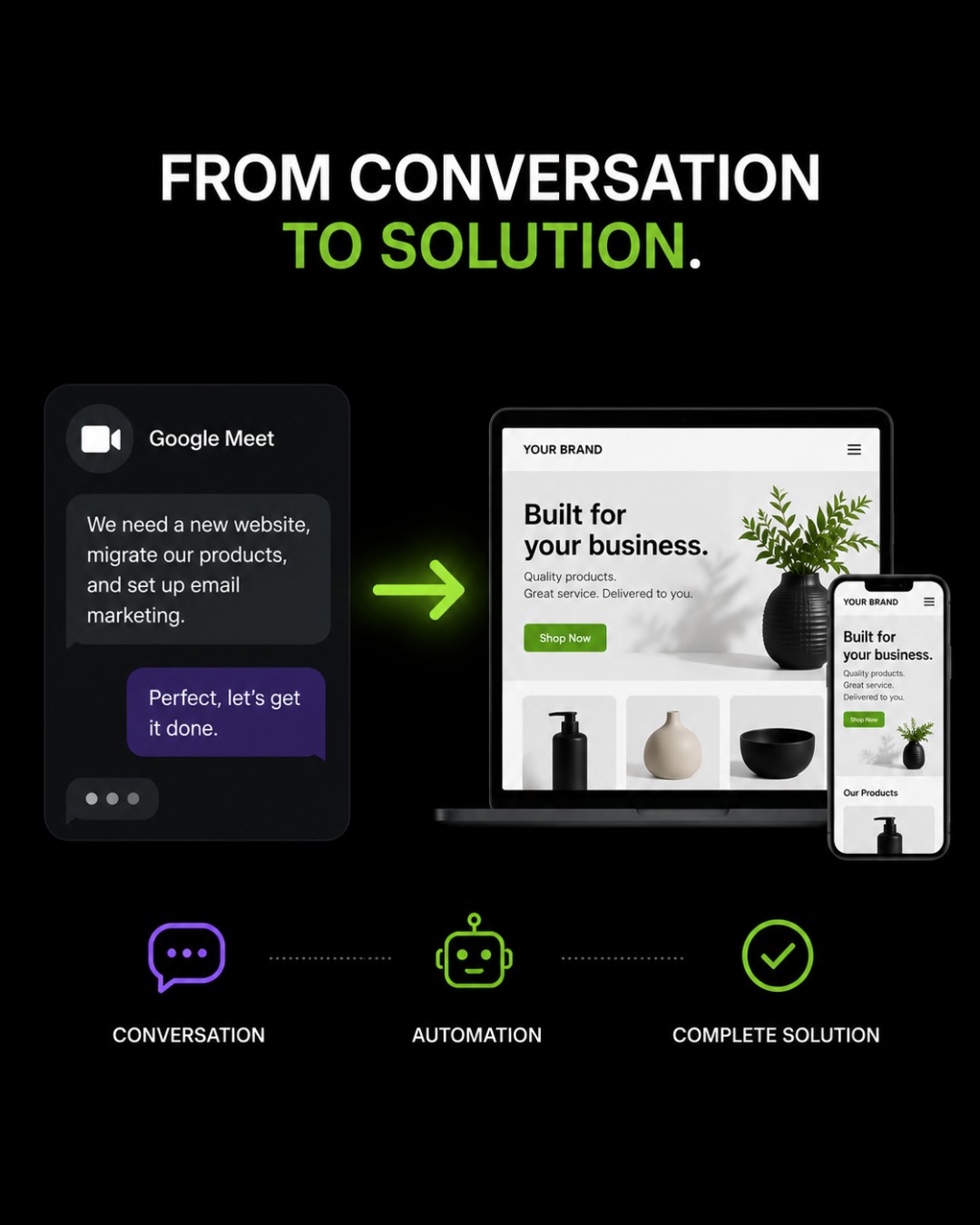
When we build a custom web-based tool for a business, we start with a straightforward question: what does your team actually do every day, and where does information currently get lost?
The answer shapes everything. For a trades business, that might mean a job manager that tracks enquiries through to completion, flags anything that hasn't moved in a week, and lets field staff update progress from a phone. For a service company, it might be a lightweight CRM that surfaces renewal dates and prompts follow-up calls before a client has time to look elsewhere. For a business with complex stock, it could be an inventory tracker that ties into their invoicing without requiring a full ERP system.
None of these are exotic. They're just clean, specific tools that do the job they're needed for — and nothing else.
Built for How You Work, Not How a Software Company Thinks You Should
The advantage of building bespoke is that the logic mirrors your process, not someone else's interpretation of your industry. Fields are named the way your team names them. Statuses reflect your actual workflow stages. Reports show the numbers your management cares about, not a default dashboard designed for a generic small business.
That specificity also makes adoption significantly easier. Staff don't need a two-day training course or a change management programme. They open it, recognise the language, and get on with the work.
The Cost Argument Is More Nuanced Than It Looks
Custom development has an upfront cost, and we won't pretend otherwise. But the comparison isn't simply build versus buy — it's build versus an accumulating monthly fee for a tool your team uses at 10% capacity, plus the ongoing cost of the workarounds that exist around it.
For many businesses, a well-scoped custom tool pays for itself within a year, sometimes considerably less. More to the point, you own it. There's no vendor decision to discontinue a pricing tier, no annual renewal negotiation, no data hostage situation if you decide to move.
When Off-the-Shelf Is Actually the Right Answer
To be fair, not every problem needs a custom solution. If a business genuinely maps onto an existing platform — if the workflows align, the team will use it, and the price is proportionate — then there's no virtue in building for its own sake. We tell clients that when it's true.
But when someone says "we really need a proper system for this" and every product demo they've sat through has left them thinking "yes, but not quite" — that gap is exactly what we exist to close.
If your business has outgrown its spreadsheets but hasn't found an off-the-shelf tool that fits, it's worth a conversation. You can see examples of the work we've done across sectors on our portfolio page, or book a call with us to talk through what a purpose-built solution might look like for your operation.