Hiring someone new feels like progress. It usually means the business is growing, the workload has increased, and there is finally budget to bring in extra hands. But employment is expensive in ways that rarely show up in the initial salary figure — and for small businesses in particular, those hidden costs can quietly erode any gain the new hire was supposed to deliver.
We work with a lot of small and growing businesses. And one of the most common conversations we have is with owners who are either about to recruit, or who are already carrying a member of staff whose week is largely composed of repetitive, process-driven tasks. Tasks that, in most cases, could be handled by a well-built AI agent.
That is not a criticism of the people doing the work. It is an observation about where AI has got to — and what it now makes practical sense to do differently.
The Real Cost of a New Hire
A salary is just the starting point. Stack on top of it employer National Insurance contributions, pension obligations, holiday pay, sick leave, onboarding time, and the months it typically takes for someone to reach full productivity, and the true cost of a new hire becomes considerably more than the headline figure suggests.
For a small business operating on tight margins, that gap between cost and output matters. A member of staff costs you whether they are productive or not. They have good weeks and difficult ones. They go on holiday at the same time as a deadline. These are human realities — not complaints — but they are factors worth accounting for honestly before signing a contract.
What a Custom AI Agent Actually Does
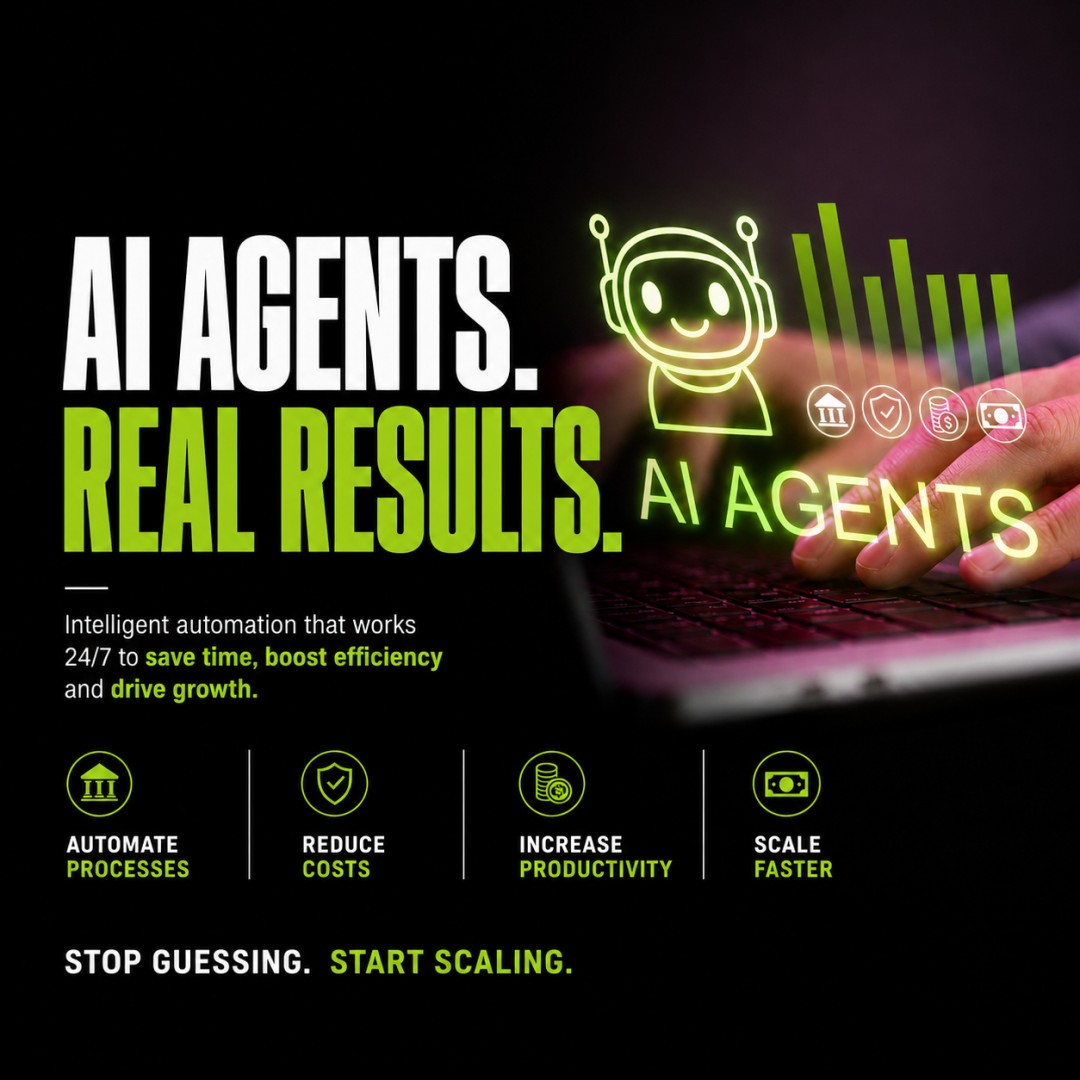
AI agents are not chatbots in the old sense. They are purpose-built systems configured around specific business tasks — and they operate continuously without supervision.
We build custom AI agents for small businesses across a range of functions: content drafting, research and data gathering, customer follow-up sequences, admin processing, internal reporting, and more. The brief always starts with the same question: what is currently eating your team's time, or stopping the business from moving forward?
Once we understand that, we build something that addresses it directly. Not a generic off-the-shelf tool bolted on and hoped for the best — a system designed around how that specific business actually operates.
The Operational Difference Is Significant
A custom AI agent works around the clock. It does not need managing in the conventional sense. It does not call in sick on a Friday before a bank holiday weekend. It does not require a probationary period or an induction programme.
For tasks that are high-volume, repetitive, or time-sensitive — customer communications, lead follow-up, content scheduling, data entry, report generation — the consistency alone has operational value. The work gets done at the same standard every time, regardless of what else is happening in the business.
And the cost, when set against a full-time or even part-time hire, is substantially lower. That difference in outlay can stay in the business, go toward growth, or simply protect the margin.
When It Makes Sense to Have This Conversation
We are not suggesting AI agents replace every hire, or that people have no place in growing businesses — of course they do. There are roles that require human judgement, client relationships, creative leadership, and strategic thinking. Those are not the roles AI handles well.
But there is a category of work — process-driven, repeatable, time-consuming — where the case for automation is now genuinely strong. If a small business is about to bring someone on specifically to handle that kind of work, it is worth pausing before committing.
The same applies if there is already someone in-house whose role has drifted toward administrative repetition. That person's time might be better spent on work that actually requires them — while an AI agent handles the mechanical layer beneath.
What to Do Before You Recruit
Before signing off on a new hire, it is worth taking thirty minutes to map out what they would actually be doing day to day. If a significant portion of that list is tasks that follow a consistent pattern — the same steps, the same outputs, the same rhythm — that is worth exploring further.
We offer an initial conversation with no obligation. We will look at what the business needs, assess whether AI automation is a practical fit, and give an honest answer either way. If it is not the right solution, we will say so.
For small businesses that are growing and watching their costs carefully, it is exactly the kind of decision that deserves proper consideration before the contract goes out. If you want to explore what a custom AI agent could do for your business, take a look at our services or book a call with our team — we are straightforward to deal with.